
We have expanded how we work with clients, from the technologies we build with to the support we provide before, during and after development.
You can now bring us a business process that needs improving, an existing application that needs attention, or an idea you want to explore with your team. We can help investigate it, show you how it could work and agree a practical route to delivering it.
Our services include discovery workshops, consultancy, ongoing engineering, custom knowledge bases and chat interfaces, and connections that let AI work with your existing systems.
We have also developed our own project management system to make the work, decisions and next steps easier to follow.
Engineering that works alongside your team
You may know what you want to improve without having a complete software specification. You may also need someone who can help make product and technical decisions as the work develops.
We can work alongside your team in that role.
We describe this as forward-deployed engineering. It means getting involved in how your organisation works, speaking with the people using the software and helping decide what should be built.
That involvement can include workshops, reviewing existing processes, investigating technical questions and contributing to planning meetings. Remote collaboration and time on site are agreed around the engagement.
What you get: engineering support that carries an understanding of your business into the application, with clear responsibilities for the work we take on.
This could suit an organisation without its own product team, a founder developing a service, or an established team that needs additional engineering involvement.
Workshops that turn an idea into a buildable plan
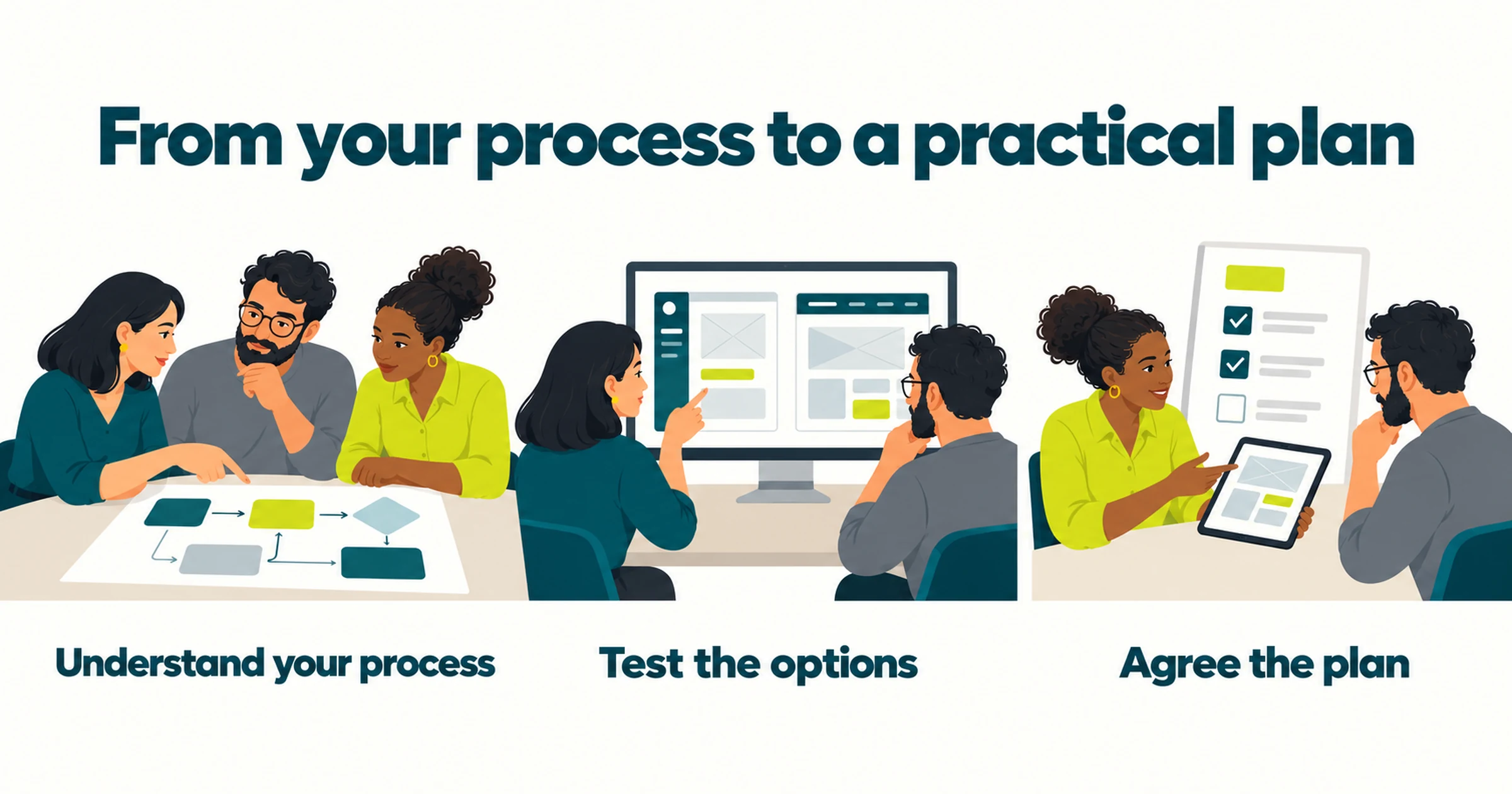
A workshop gives your team a structured way to work through a problem with us before committing to development.
We look at the people involved, the process they follow and the information they need. We examine what already works, where the difficulties are and what a useful first improvement would look like.
Preparation can include a short questionnaire or a review of your existing application. That gives us something specific to work from and lets people contribute individually before the group discussion.
Depending on the project, we can then create a clickable prototype for your team to review. You can try proposed screens, compare different approaches and tell us what needs to change.
What you get: an agreed scope, a clearer view of the decisions still needed, and practical options for the next stage. Where included in the engagement, you also get a prototype that helps your team assess the proposed application before the main build.
A workshop can be the start of a development project or a focused piece of consultancy. We agree the sessions and outputs around the decision you need to make.
Your own knowledge base
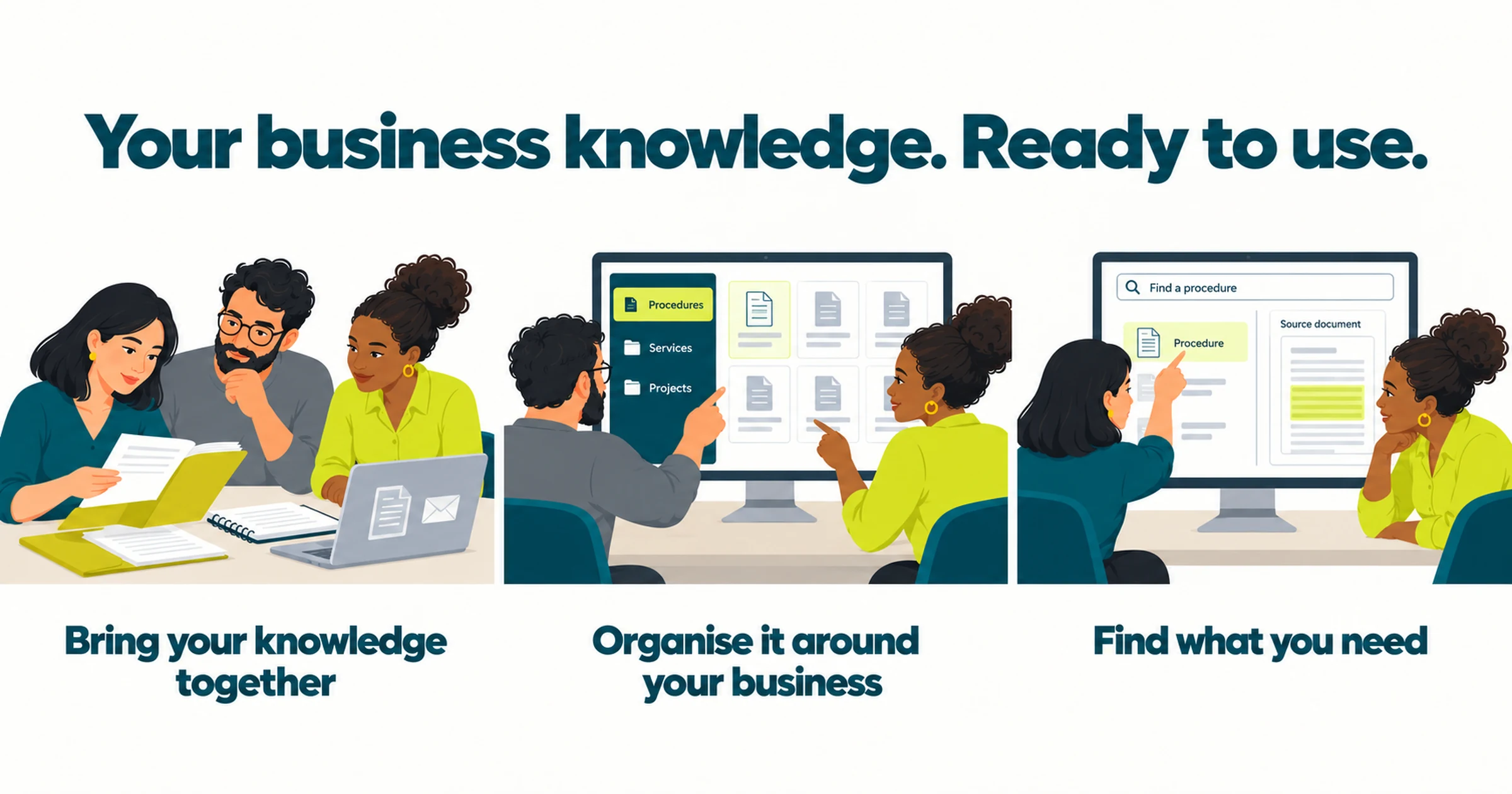
Your organisation’s useful information may be spread across documents, shared folders, emails and the knowledge of individual team members.
We can help bring selected information into a structured knowledge base, designed around how your team needs to find and use it.
That could include internal procedures, service information, product documentation, project knowledge or answers to recurring questions.
The work starts with deciding which material belongs there, who owns it and how it will stay current. We can then build the structure and management tools around those responsibilities.
What you get: a place for agreed business knowledge, with a defined way to organise, access and update it.
It could help new staff find their way, give a service team a consistent reference or reduce the time people spend asking colleagues where something is kept.
The quality of the source material matters. Part of our work can be identifying gaps, conflicting information and content that needs an owner.
A custom chat interface for your business
We can build a chat interface around your organisation’s information and the tasks your users need help with.
This can be an interface within your existing application or a separate tool with its own design, sign-in and access rules. The experience can be built for staff, customers or another defined group of users.
For example, an internal assistant could help people find procedures and understand how to follow them. A product assistant could help users navigate service information or retrieve selected records from the application.
We agree what the assistant should answer, which information it can use and what should happen when it cannot give a reliable answer.
What you get: a chat experience designed for a specific audience and purpose, connected to the information you choose to make available.
A knowledge base and a chat interface can be developed together. They can also be separate pieces of work if you already have one part in place.
Connect AI to the systems you already use
An assistant can be more useful when it can work with current information from your business systems.
We can build bespoke integrations, including connections using the Model Context Protocol, or MCP. This provides a standard interface through which compatible AI applications can access selected information and tools.1
Depending on the integration, your assistant could find a record, check a project status or prepare an update for review.
We define the available actions and access rules during the design. Reading information, proposing a change and making a change are separate capabilities.
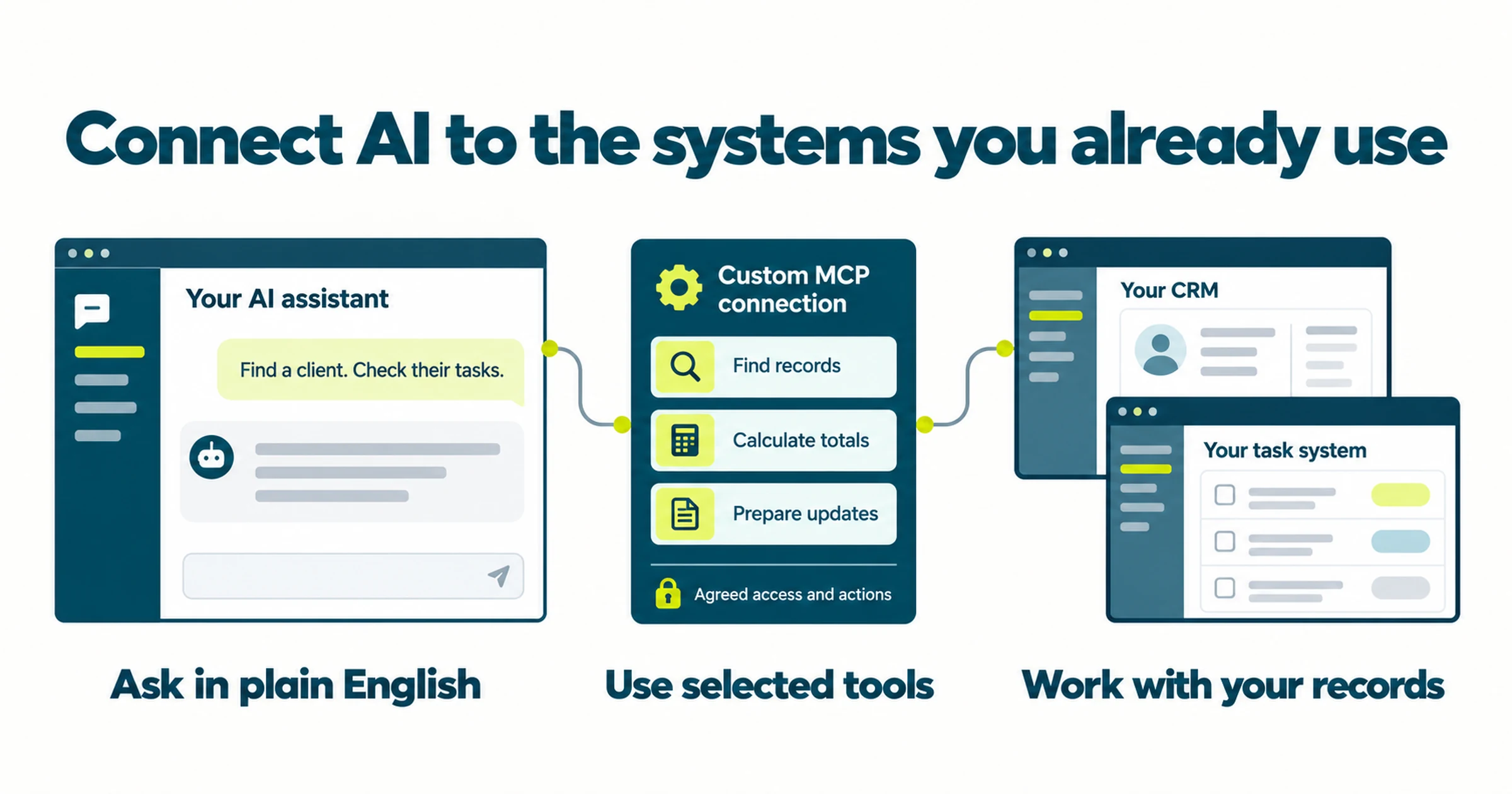
What you get: a connection built around a useful task, with agreed permissions and approval steps.
You might use this within your own chat interface or through a compatible AI application your team already works with.
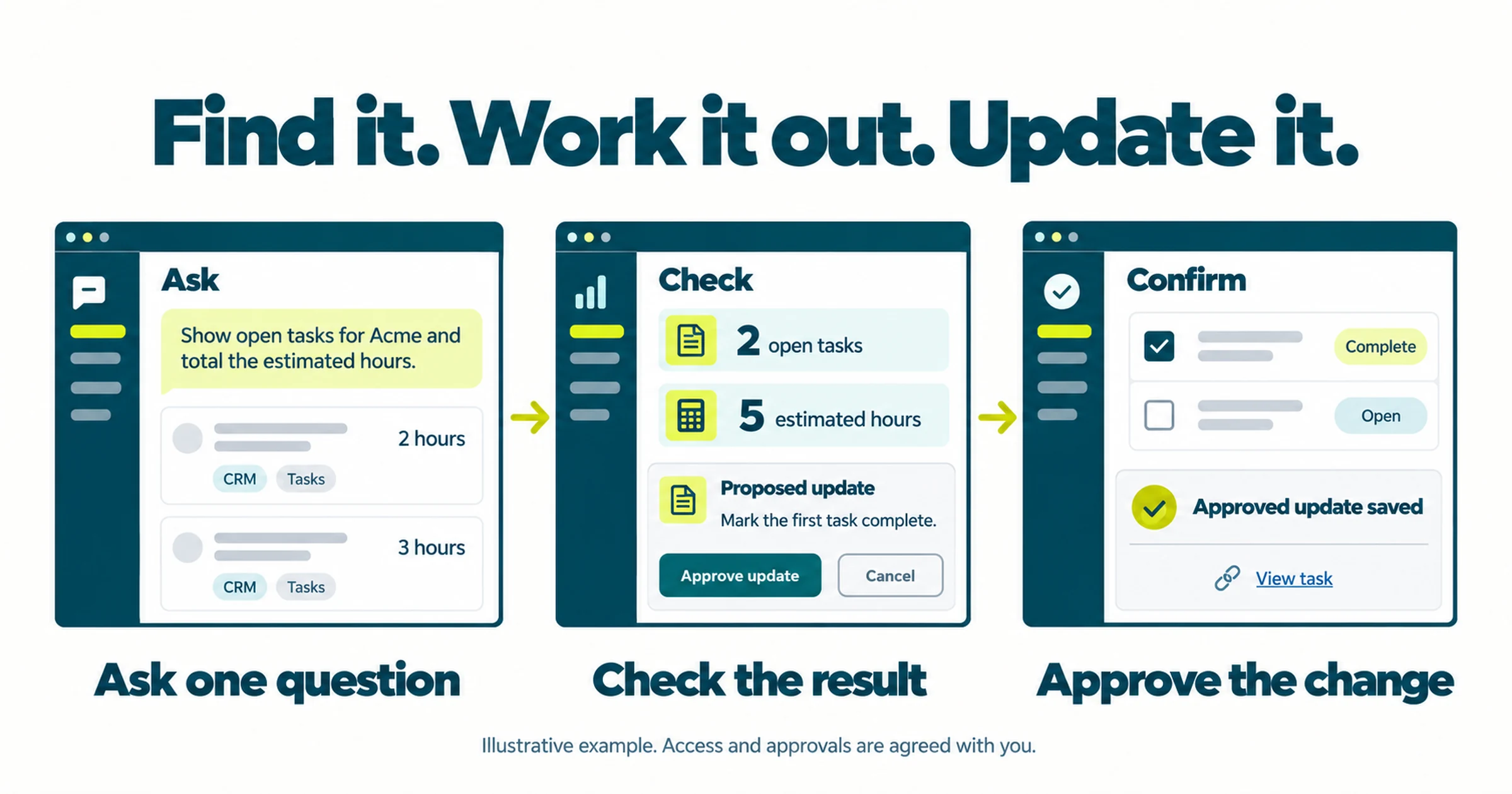
The screens above are illustrative examples, rather than screenshots of a client system.
Business tools your team can manage
You may need a focused application for one part of the business: handling requests, managing records, reviewing approvals or giving customers access to their information.
We can build that application and design its management screens around the people responsible for running it.
Your team could manage content, update records, assign work or adjust agreed settings without needing a developer for those everyday tasks.
What you get: software built around your process, with controls for the people who operate it.
For a well-defined task, a focused first version can sometimes be built in weeks. We agree the scope and distinguish between a prototype, a usable first release and the work required for production use.
The timetable depends on the application, its integrations and the information and decisions needed to complete it.
Support for teams building their own applications
Some clients want their own team to take a more active role in building software.
We can support that approach too.
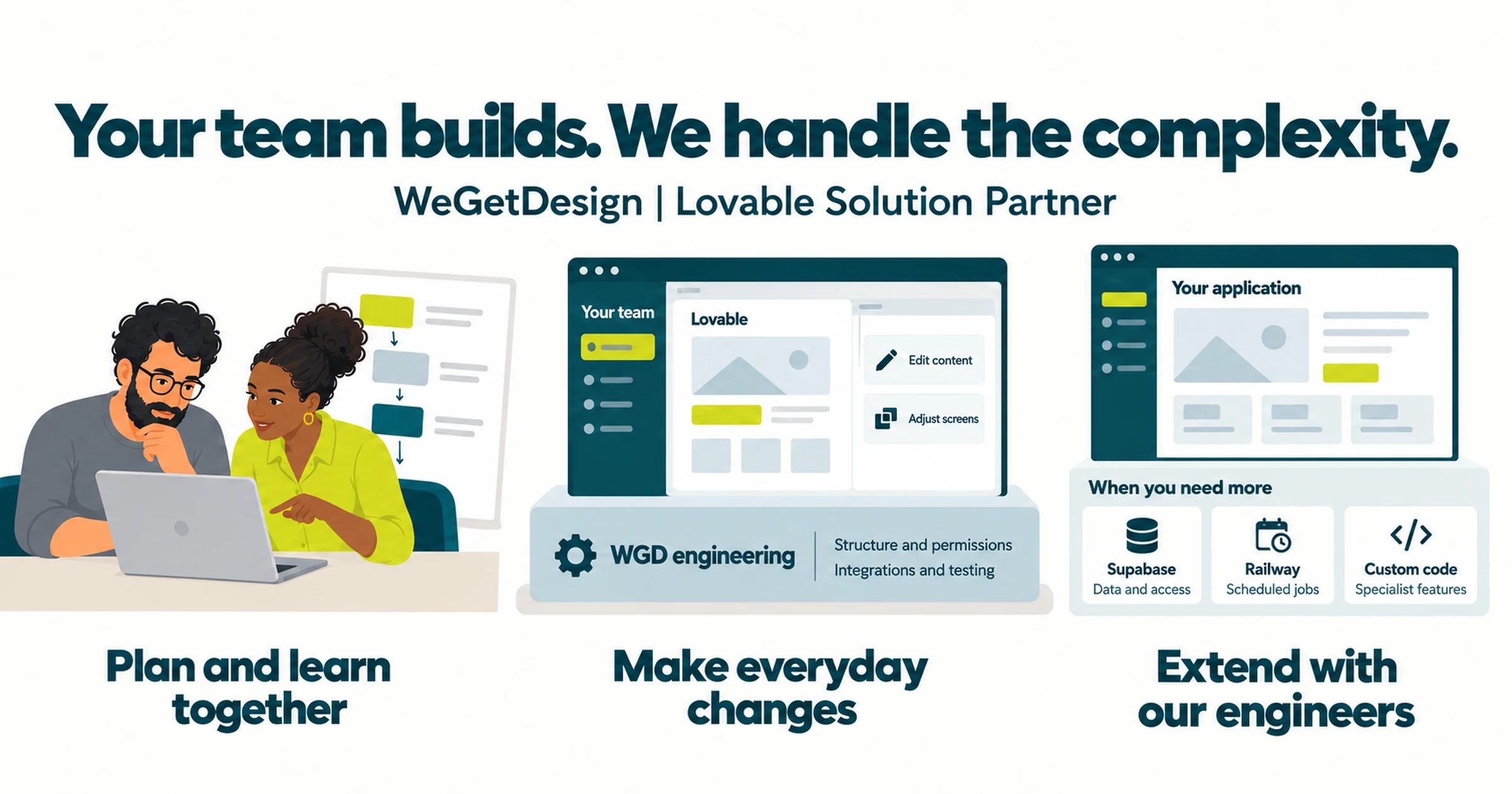
For a suitable project, your team could build parts of the interface in Lovable while WGD handles agreed engineering work, such as the backend, data structure, integrations or mobile application.
Lovable supports synchronising project code with GitHub, giving engineers a route to contribute to the connected project.2
We agree which parts your team can change themselves, where they need support and how changes reach the live application.
What you get: a division of work that makes use of your team’s business knowledge and willingness to build, with engineering involvement around the parts that need it.
This works best when someone on your side has time to participate. We can also take responsibility for the full build where that is the better fit.
A wider choice of technology
We continue to develop and support Bubble applications, alongside our work with Lovable, Supabase, Railway and custom code.
We have also joined the Lovable Solution Partner Programme, with our certification process still in progress.
For you, the useful change is the range of approaches we can consider. We can continue improving an existing application, connect it to another service or assess a different approach for a new requirement.
We look at your users, information, integrations, budget and ongoing maintenance needs before recommending the combination.
What you get: a technical recommendation that explains why the proposed approach fits your project and what will be involved in running it.
Existing clients can discuss these options with us as their requirements develop. Using a wider range of technologies does not itself create a reason to replace software that is doing its job.
A clearer view of your project
We have developed our own WGD project management system to support how we organise delivery and communicate with clients.
It brings the work and its context together: what a task is for, what needs to happen and what is ready for review. We first set out that direction in our December 2025 introduction to WGD Project Manager.3
Client-facing updates can also be shared through Slack, with a practical explanation of the work and technical detail where useful.
We will walk you through how this applies to your engagement and agree how your team will participate.
What you get: a clearer way to follow progress, review work and see where a decision or contribution is needed from you.
Our own AI connections also support this process by helping us work with information on the project boards.
Development and support as your business changes
Your requirements will continue to develop once an application is in use.
We can stay involved through an ongoing engineering relationship, helping investigate issues, make improvements and assess new requirements.
The engagement can cover development, maintenance, technical advice and product planning. We agree the scope, priorities and available capacity with you.
What you get: continued access to a team that understands the application and can help plan its next stage.
That can mean a sequence of focused improvements or a broader engineering role alongside your organisation.
Start with the part you want to improve
You do not need to arrive with a finished brief.
Show us the process that takes too much effort, the information your team struggles to find or the application you want to develop further.
We can agree a useful first step and explain what you will receive from it.
Last checked: 29 October 2026.